
The line of thought I followed in Trust the process, part II, also has led me to thinking about process, confidence and problem-solving as it relates to teaching.
To be honest, as 2026 started, I was beginning to dread teaching. My fears were mimicking my painting blocks.
Because I felt like I had forgotten how to teach.
In the last year, I’ve become more sensitive to situations when students express deep disappointment that their painting does not come out exactly as my example painting does. I try to circumvent this possibility by explaining early in the class how the whims of watercolor — a fluid medium — do not allow for exact replication, and that their painting will end up being uniquely theirs, but that has not helped as much as I had hoped. And the increasing proliferation of online videos and reels don’t make my explanations easier to accept because the slickly edited videos make watercolor look so easy. It’s not, believe me.
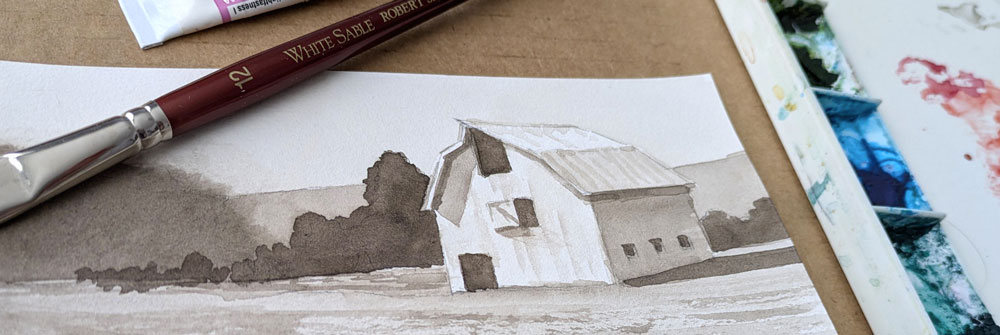
When I teach beginner watercolor classes, my first goal has always been to instill confidence. To accomplish that, I would break things down as simply as possible. I would use specific methods and materials in a prescriptive way because I knew the students will have a high rate of success and likely will feel good about what they had done. And the vast majority of students have left sessions expressing excitement about their creations, and that makes me happy to see that they are happy.
But, even with that positive outcome, I have started to worry that I’m setting up happy students for failure down the road because my prescriptive approach in beginner classes does not help with problem-solving. I’m telling the students what to do and when to do it. So, if a student feels excited and wants to do more with the medium, have I prepared them for the next step?
Of course, that answer depends on what is expected. For many people, taking a class is a fun diversion and not meant to lead anywhere else. But if a student does expect more, and wants to do more, what can and should I do to loosen my approach and create more problem-solving opportunities at the beginning that will help a student grow and develop?
So, at the start of 2026, I started to rethink my approach for beginners…. mind you, not for the one-session beginner classes, because — at least for right now — I really, really don’t know how else to ensure predictable results for students in that tightly constrained format. So my class redesign focus was for when I have opportunities to work with students in multi-class series, or I am teaching students who are more familiar with watercolor. I spent time thinking about open-ended projects and providing students with tools so they could start to problem-solve on their own.
So even for the teacher, it’s been back to the basics…. Trust – and teach – the process. And a sincere hope that we – teacher and students – would get through this block together.
And I have some good news to share…. in the next post. Stay tuned.